Move to the Slack app
- Connect your Slack workspace and add the same channels.
- Set up each channel’s events and filters to match your old webhook.
- Send a test notification to each channel.
- Delete the old connection so the channel doesn’t get duplicate notifications:
- Legacy Slack Integrations: at the bottom of Settings → Slack.
- Event webhooks with the Slack payload: in Settings → Webhooks.
Legacy Slack Integrations
If your organization set up Slack alerts with an App ID, signing key, and incoming webhook URL, those connections are listed under Legacy Slack Integrations at the bottom of Settings → Slack. You can edit or delete them there, but you can’t create new ones. Use the Slack app or an event webhook instead.Send alerts with an event webhook
You can post GrowthBook events to a Slack channel with an event webhook that uses the Slack payload. You don’t need to install the GrowthBook app for this, but messages are always plain text.Create a Slack app
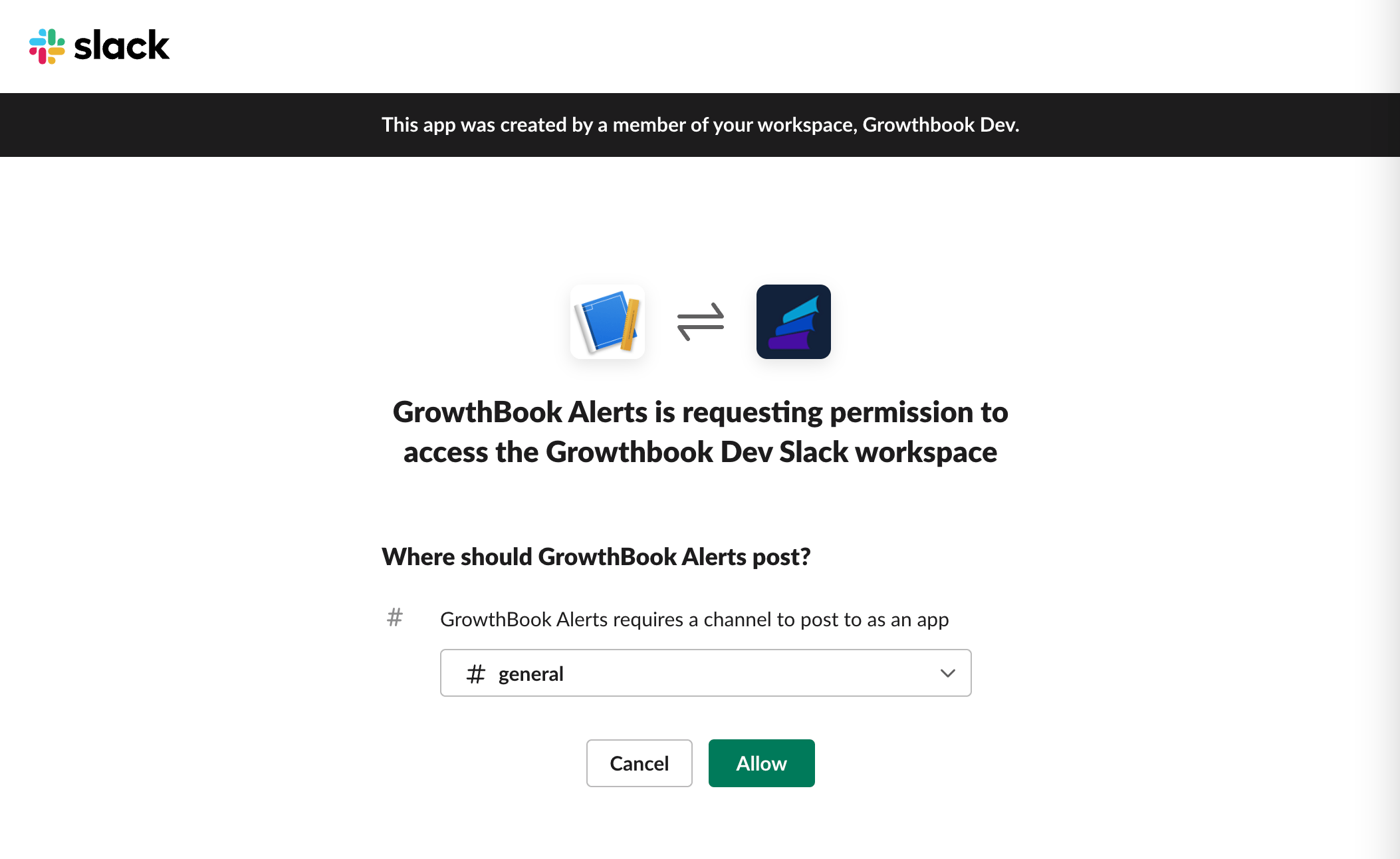
You need administrative privileges for your Slack workspace to manage apps. Go to Slack’s new app page and create a new app.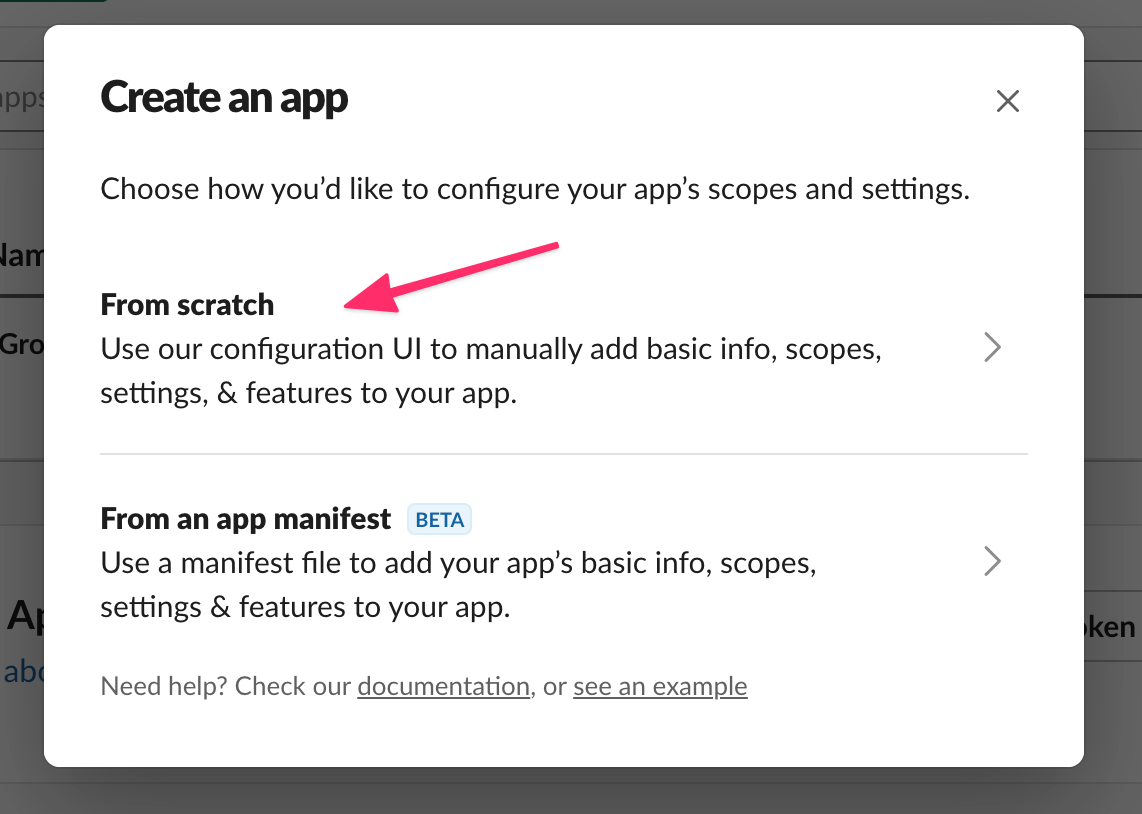
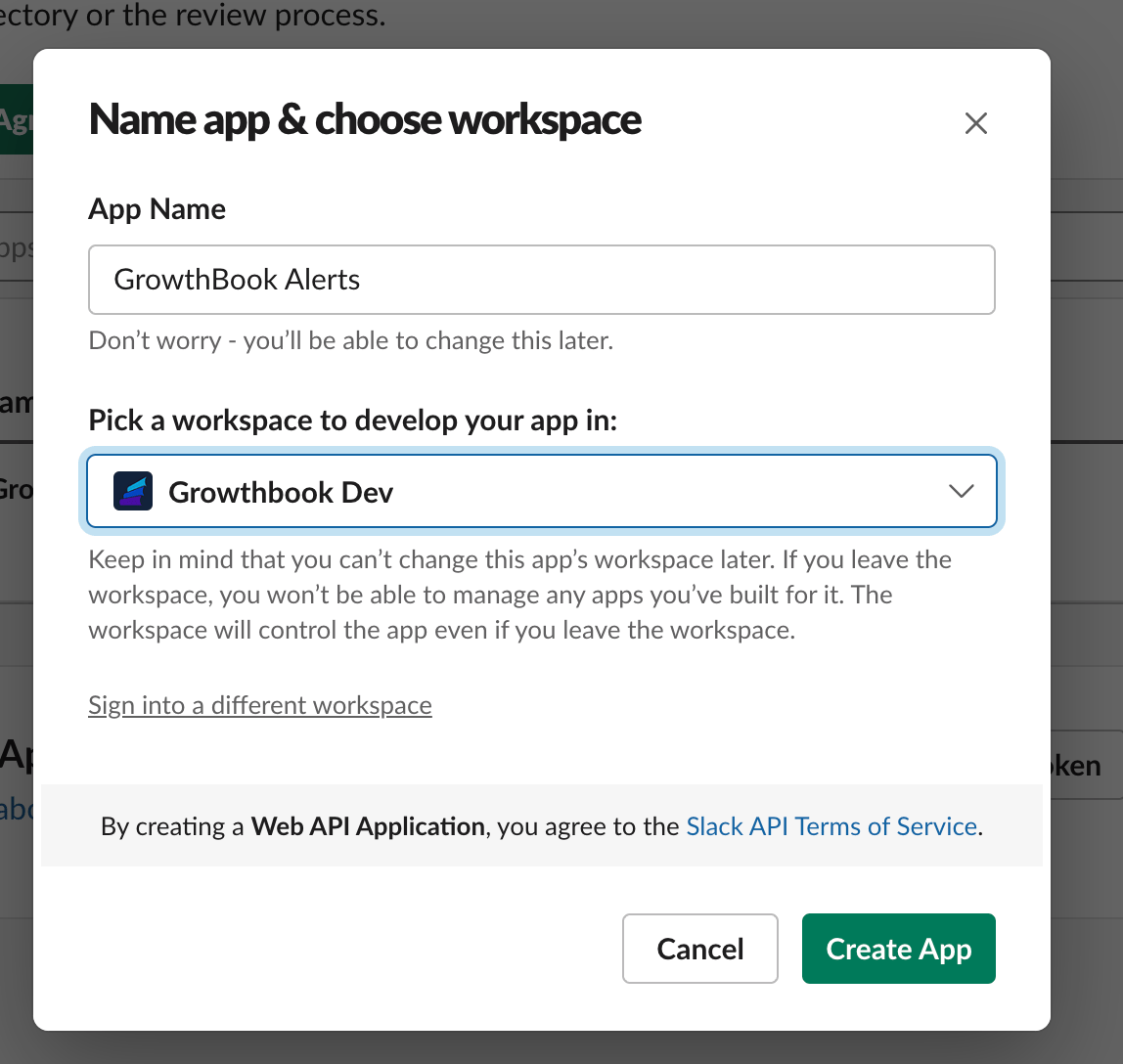
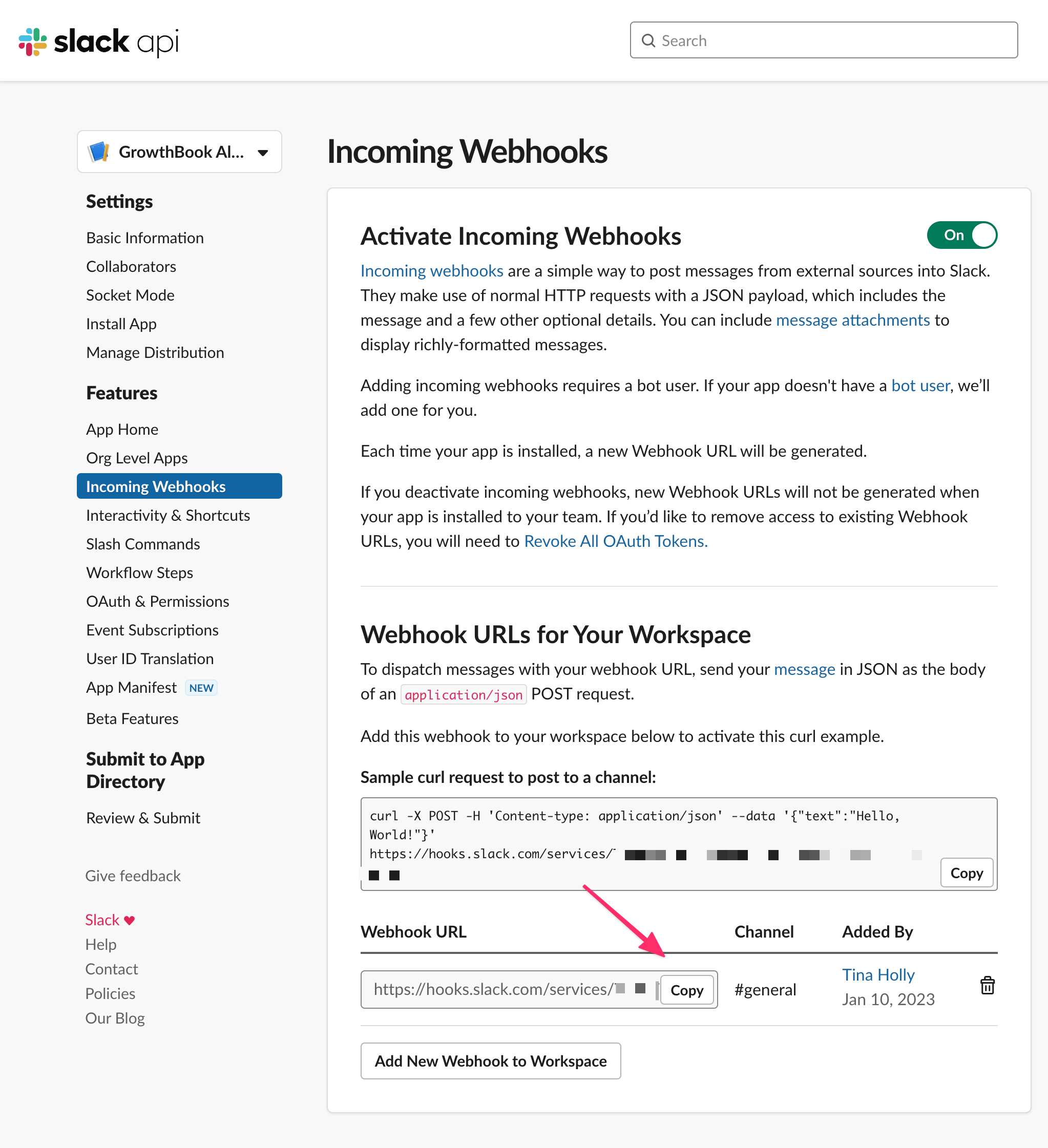
Create an incoming webhook
Under the Basic Information tab of your app, click Incoming Webhooks.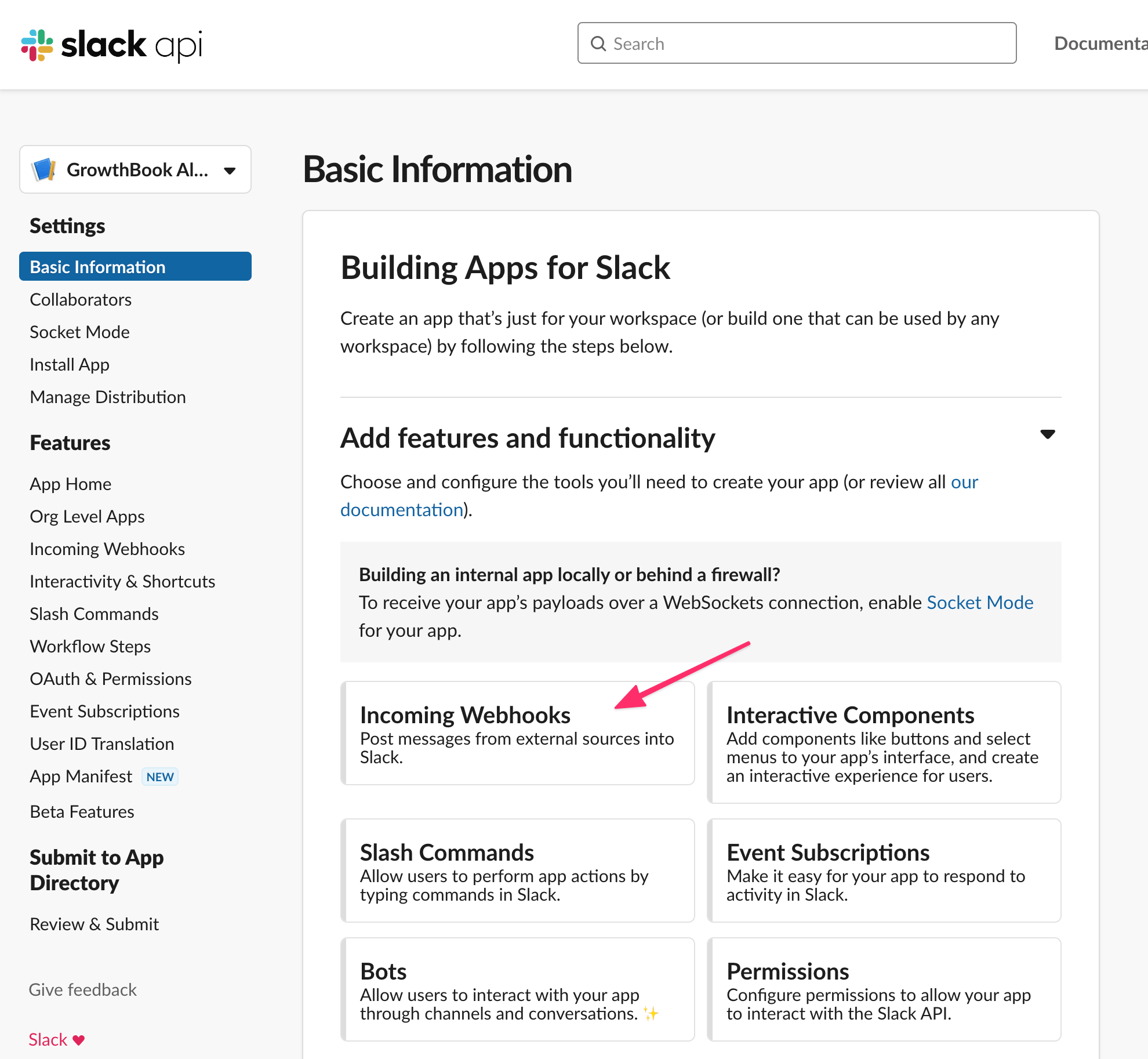
Add the webhook to GrowthBook
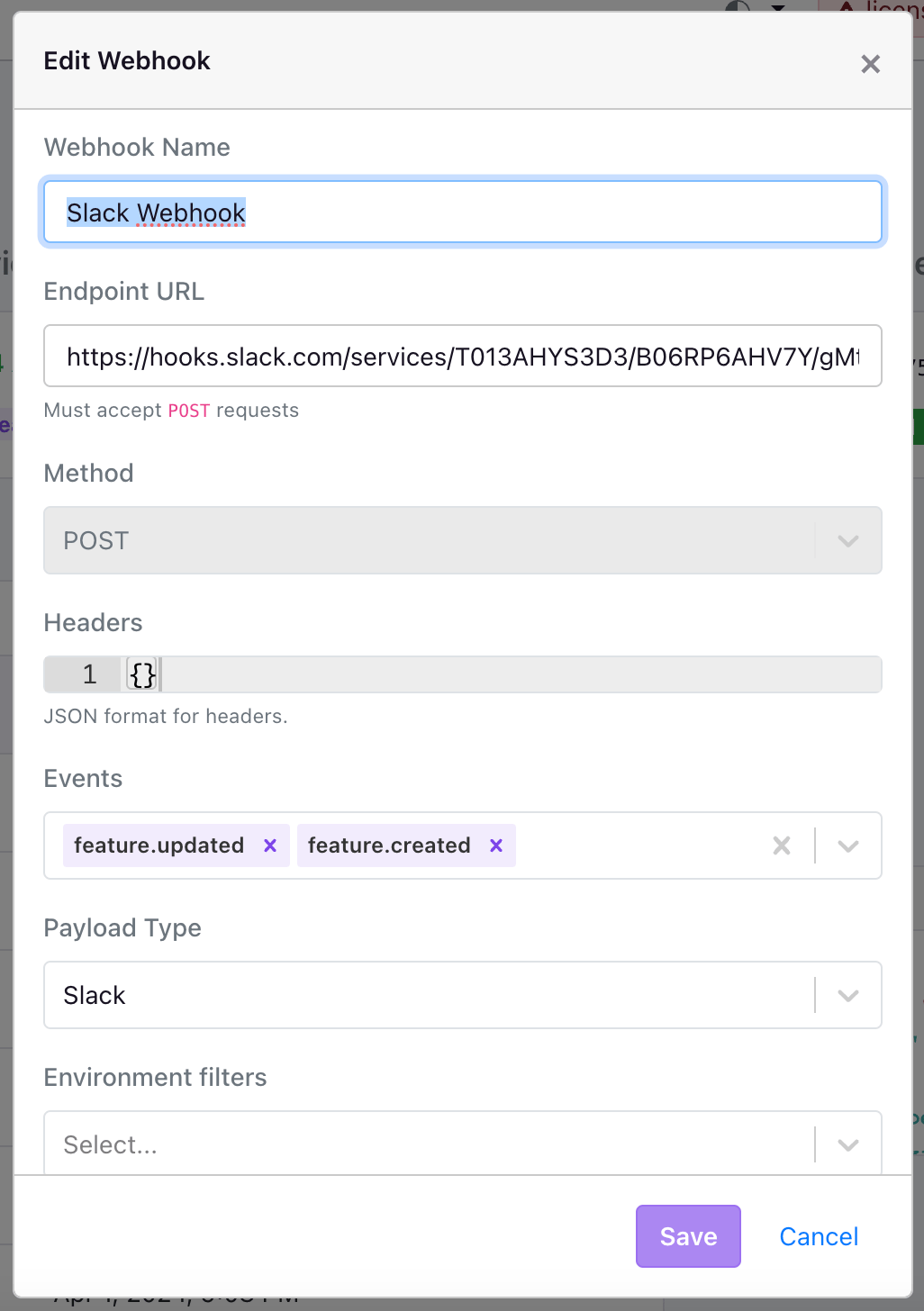
Go to Settings → Webhooks in GrowthBook. You need permission to manage webhooks to see this page. Click Create an Event Webhook.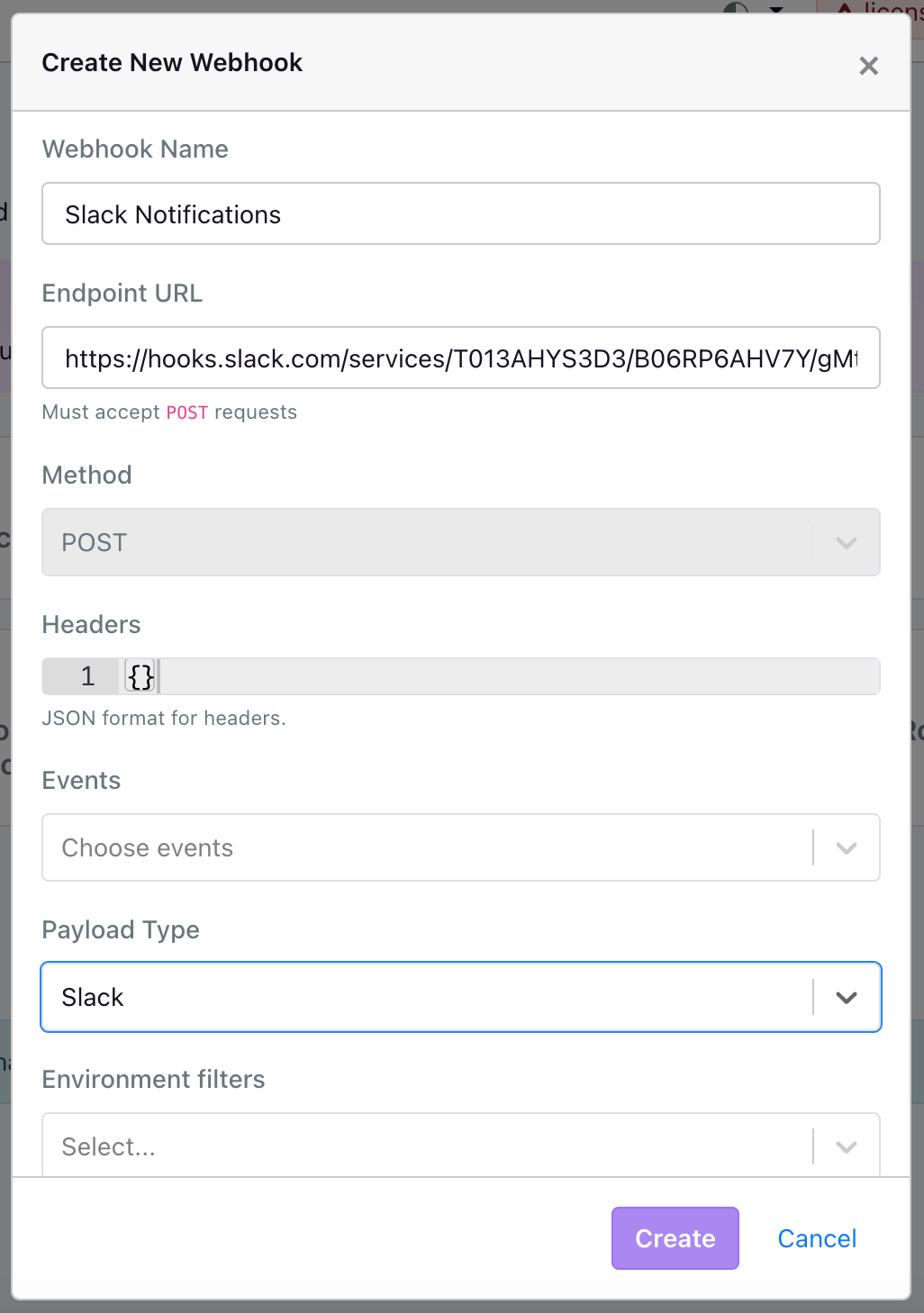
- Name: helps you tell webhooks apart. It also shows in the context text of each alert.
- Endpoint URL: the webhook URL from your Slack app.
- Payload: select
Slack. - Event filters: optional. For example, choose
feature.deletedto only hear about deleted features. Leave blank for all events. - Environment filters: optional. For example, choose
productionto only hear about production. Leave blank for all environments. - Project filters: optional. Leave blank for all projects.
- Tag filters: optional. Leave blank for all tags.